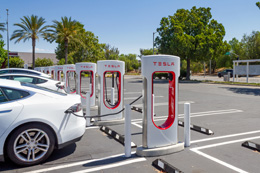
Canada should tap the brakes on EVs
EV sales have slowed significantly across Canada and the United States over the past year
Guest Commentary
By Kenneth P. Green
A recent article in The Daily Mail asks, “Is the global EV bubble bursting?” The article then answers the question by looking at electric vehicle (EV) sales figures for six major manufacturers. Sales are down across the industry—Tesla, down 20 percent in the first quarter this year compared to the same time last year; China’s EV manufacturer, BYD, down 43 percent; GM down 20.5 percent; and Volkswagen down 3.3 percent. Honda saw an anemic uptick of 0.2 percent. Only BMW experienced a substantial increase in EV sales, up 41 percent. Not surprisingly, share prices have also dropped across the industry.
An Associated Press article shines more light on EV sales, which in the United States grew only 3.3 percent in the first quarter of this year, a tiny fraction of the 47 percent growth that fuelled record sales. The EV share of total U.S. sales fell to 7.15 percent in the first quarter, down from 7.6 percent last year. The slowdown, led by Tesla, “confirms automakers’ fears that they moved too quickly to pursue EV buyers.”
In other EV news, Ford announced it would cut back on EV battery orders, signalling that the company anticipates fewer EV sales in the future. That would seem to be a good thing for Ford shareholders, as the company also admitted its lost $100,000 on every EV it sold in the first quarter of 2024. Ford expects to lose some $5.5 billion from EV sales this year.
So what does it all mean?
Countries that adopted EV sales mandates earlier than Canada are already finding their EV sales targets moving out of reach. In the United Kingdom, which has a 2024 EV sales target of 22 percent, according to the Society of Motor Manufacturers and Traders, the share of the new car market held by pure battery EVs will be only 19.8 percent by the end of 2024. The U.K.’s EV sales targets, like Canada’s, require 100 percent of new vehicle sales to be electric by 2035.
And the rest of Europe is also falling short of EV transition mandates. Forbes reports that current sales of EVs in Europe have flattened to just over 2 million a year, essentially because the continent has run out of early adopters and corporate purchases. Forbes also observes that “other leading market forecasters still expect sales to explode and reach close to 9 million in Europe by 2030,” but that this rate of growth won’t be enough to let the EU and Britain reach target goals of EVs achieving close to an 80 percent market share.
Meanwhile, the Trudeau government clings to its mandated EV transition, gambling with taxpayer money hand over fist as it pours more than $44 billion into various EV and battery manufacturing operations. And as Andrew Coyne observes in the Globe and Mail, it’s worse than that, as “all of that money will be borrowed, interest costs should also be included. The PBO estimates these at $ 6.6 billion. All told, that’s $50-billion of other people’s money. For three factories.”
Ottawa’s EV transition policy is deeply misguided and already shows signs of incipient failure. And likely more failed taxpayer “investments” lie ahead. A smart government would tap the brakes on its EV transition policy. The bubble is growing.
Kenneth P. Green is a Senior Fellow at the Fraser Institute.